Members and roles
Linear provides several role types to help you control access and permissions across your workspace. Each role gives team members the right level of access—from full administrative control to limited guest visibility.
Please note that on Free plans, all users are Admins.
Overview
Users with administrative roles can manage workspace members and their roles from Settings > Administration > Members. This page lists all active and suspended members and allows filtering by role or status (Pending invites, Suspended, or users who have left the workspace).
On Enterprise plans with SCIM enabled, some or all member management will be accomplished through your IdP instead of the Members settings page.
Managing user roles
Changing a member’s role
To update a user’s role:
- Go to Settings > Administration > Members page
- Hover over a member’s row
- Click the overflow menu (⋯)
- Select the Change role...
Suspend a member
Administrative roles can suspend a member from the workspace:
- Go to Settings > Administration > Members
- Hover over a member’s row
- Click on the overflow menu (⋯)
- Select Suspend user...
Suspended users lose all access immediately and are removed from your next billing cycle. They remain visible in the members list for historical purposes—for example, when viewing issues they created or were assigned to.
To view issue activity for a suspended user, visit their profile page at:linear.app/<workspace-name>/profiles/<username>
Admins can access this link from the user’s avatar or by filtering the Members page for Suspended users.
Viewing workspace admins
Any member who needs to quickly identify workspace administrators can:
- Open Command menu Cmd/Ctrl K and select View workspace admins
- Navigate directly to linear.app/settings/view-admins
Role types
Workspace owner
The workspace owner role is only available on Enterprise plans
Workspace owners have full administrative control, including access to sensitive settings like billing, security, audit logs, workspace exports, and OAuth application approvals and team access management. Admins have more limited permissions for day-to-day workspace management.
For more flexibility, workspace owners can configure which roles can perform certain workspace-level actions in Settings > Administration > Security, under Workspace restrictions.
SCIM-managed workspaces
Enterprise workspaces with brand new SCIM setups should create a linear-owners group to manage workspace owners, in addition to any other role groups described here.
If you are upgrading an existing workspace that uses SCIM to the Enterprise plan, please look at this article to understand what actions you need to take.
Admin
Admins have elevated permissions to manage routine workspace operations. This role is well-suited for managers, team leads, and operations-focused members.
Free plan behavior
All workspace members become admins automatically
Basic and Business plan behavior
The user who upgrades the workspace is granted the admin role
Enterprise plan behavior
Admins will have limited permissions
Team owner
Available on Business and Enterprise plans
Delegated control over how individual teams are run, without routing every change through workspace owners or admins.
Configure team owners
Workspace admins/owners or team owners may:
- Go to Team settings > Access and permissions and adjust settings to be restrictive to team owners only
- Navigate to Team settings > Members to promote members to team owners
There is no limit to the number of team owners a team can have, and teams are not required to have a team owner.
Who are team owners?
- Workspace admins and owners are automatically team owners for all teams they can access. For any newly created team, the creator becomes a team owner by default
- Any team member can be promoted to team owner by an existing team owner or a workspace admin/owner
- Team owners in the parent team are team owners in the sub-teams
- Guests cannot be team owners
Team owner only operations
Certain critical actions are restricted to team owners only:
- Deleting a team
- Making a team private
- Changing a team’s parent
Configurable permissions
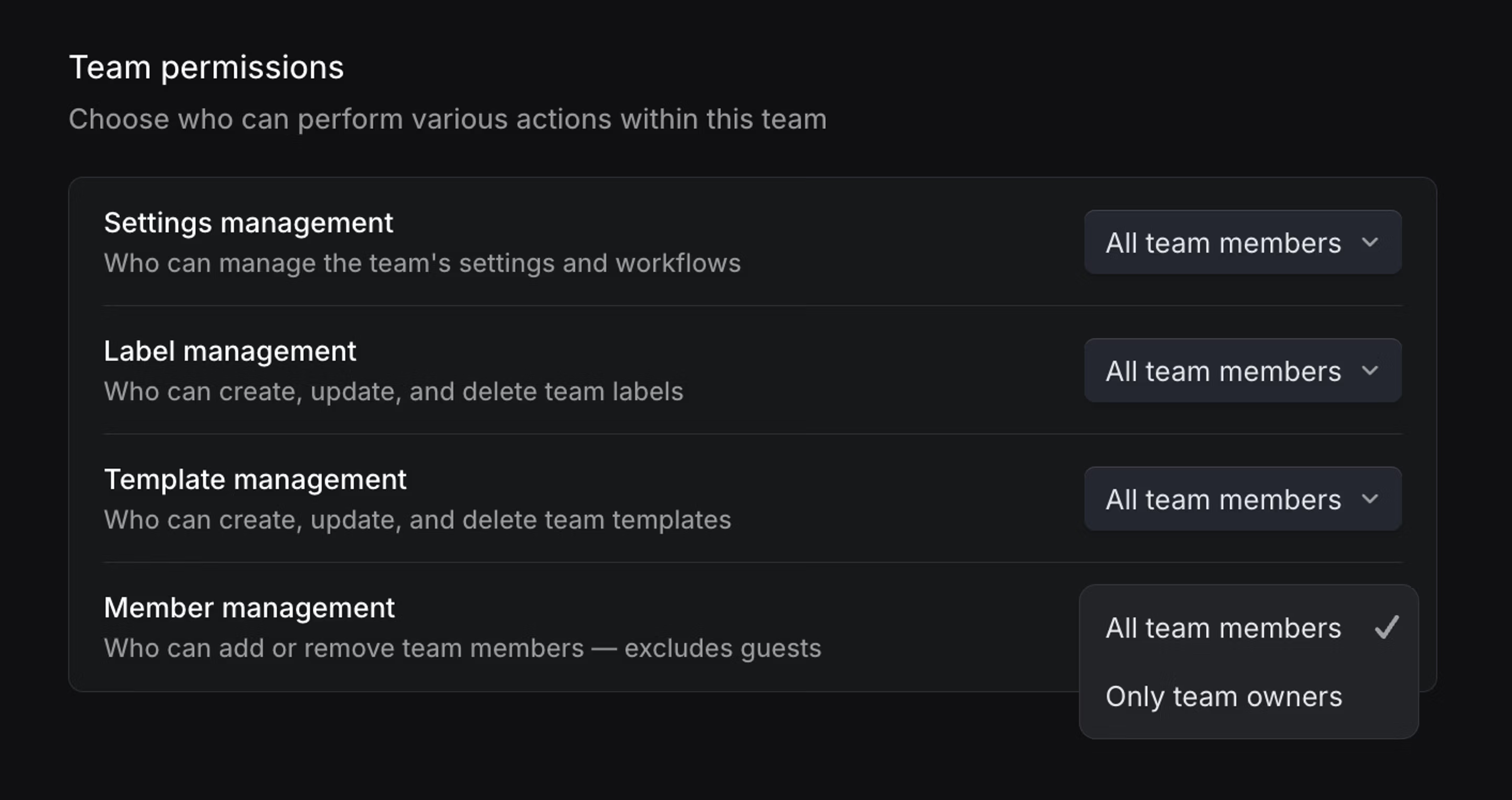
From Team settings > Access and permissions, team owners can choose whether to allow all members or only team owners to manage the following:
- Issue Label Management - Control who can create and edit team issue labels.
- Template Management - Control who can create and edit team templates.
- Team Settings Management - Control who can manage workflow statuses, cycles, triage rules, agent guidance, and other team settings.
- Member Management - Control who can add new users to the team. Note: Only team owners can add guest users, regardless of this setting.
Permission settings are not inherited from parent team to sub-team.
Team access
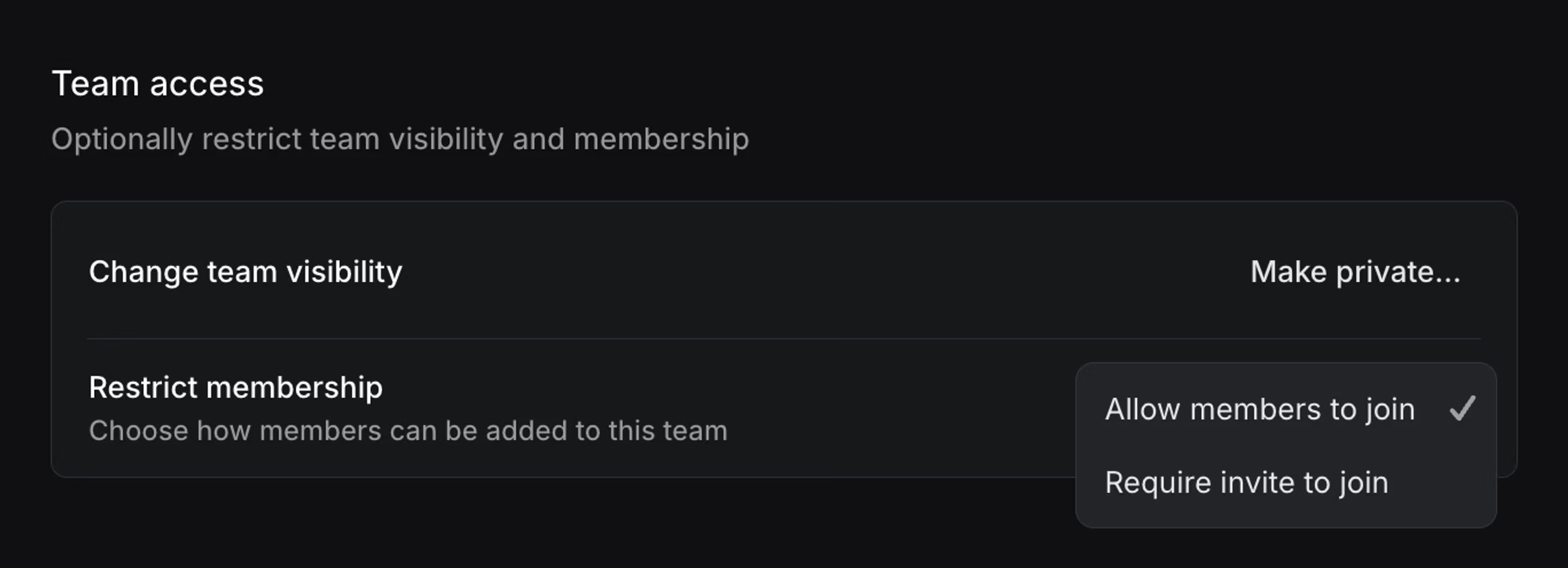
From Team settings > Access and permissions, team owners can also choose to restrict how members can join your team. By default, any member of your workspace can join a non-private team. Team owners now have the option to restrict access to only members they add or invite.
Member
Members can collaborate across teams they have access to and use all standard workspace features. They cannot access workspace-level administration pages.
Guest
Guest accounts are only available on Business and Enterprise plans, and are billed as regular members.
Guest accounts grant restricted access to specified teams—ideal for contractors, clients, or cross-company collaborators.
Guests can
- Access issues, projects, and documents for the teams they are explicitly added to
- Take the same actions as Members within those teams
Guests cannot
- View workspace-wide features such as workspace views, customer requests, or initiatives
- Access settings beyond their own Account tab
- Use Code Intelligence
Sharing projects with guests
If a project spans multiple teams:
- Guests will only see issues belonging to the teams they’re part of
- They will still see the project shell, but only with their allowed team’s issues visible
Integration security
Integrations enabled for the workspace will be accessible to guest users, which could potentially allow them to access Linear data from teams outside those they’re invited to join. To prevent data leakage:
- For Linear-built integrations (GitHub, GitLab, Figma, Sentry, Intercom, Zapier, Airbyte): Ensure guest users don’t have access to your accounts on those services
- For integrations requiring email authentication (Slack, Discord, Front, Zendesk): These should automatically limit access to only issues and data in invited teams — though Slack link previews (unfurls) follow the channel’s visibility and the workspace Unfurls setting, not the viewer’s role.
- For third-party integrations: review access individually or contact the integration provider in the Integrations directory.