Output isn’t design
Design keeps being misunderstood in our industry. New tools keep promising to generate interfaces faster, move words to product instantly, or collapse design directly into code. The assumption behind them is clear: that design is the act of producing.
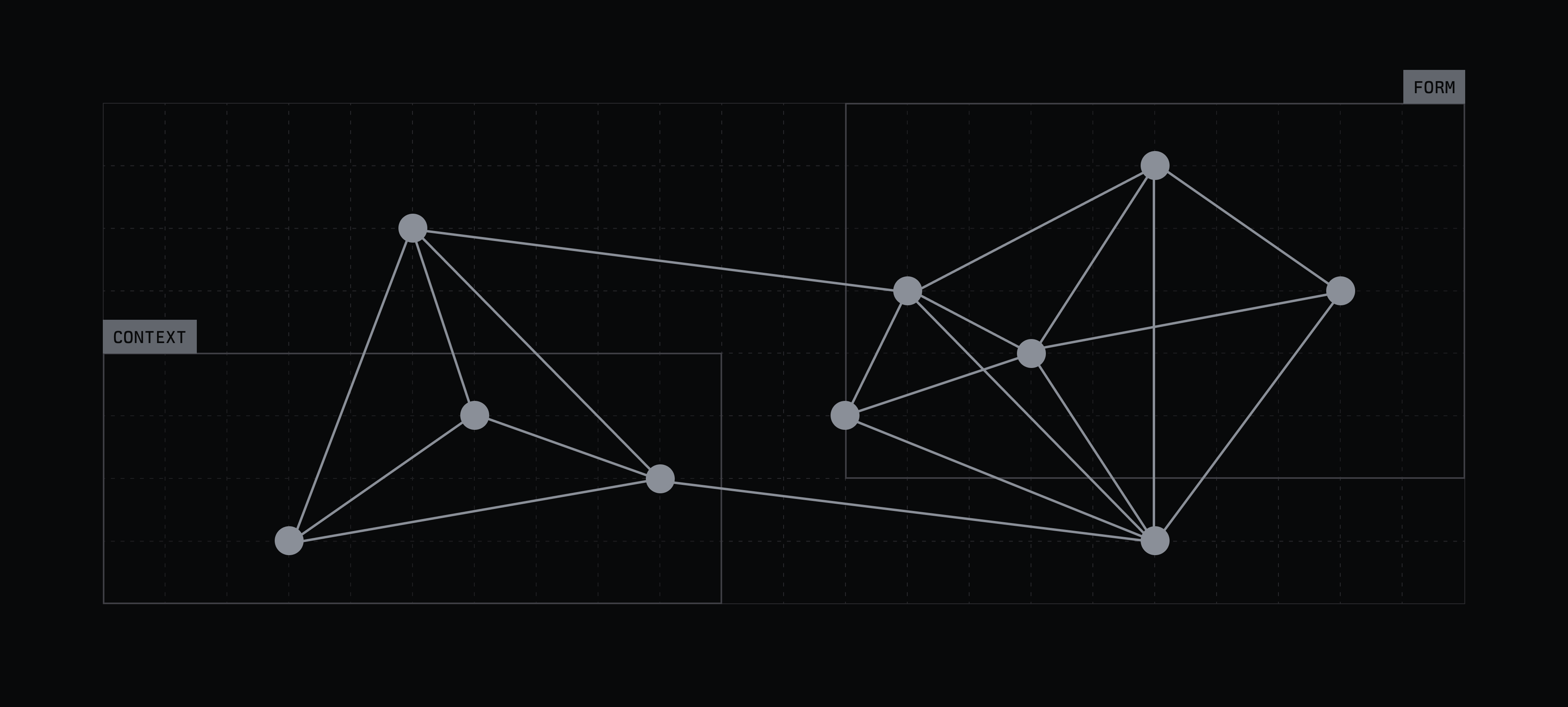
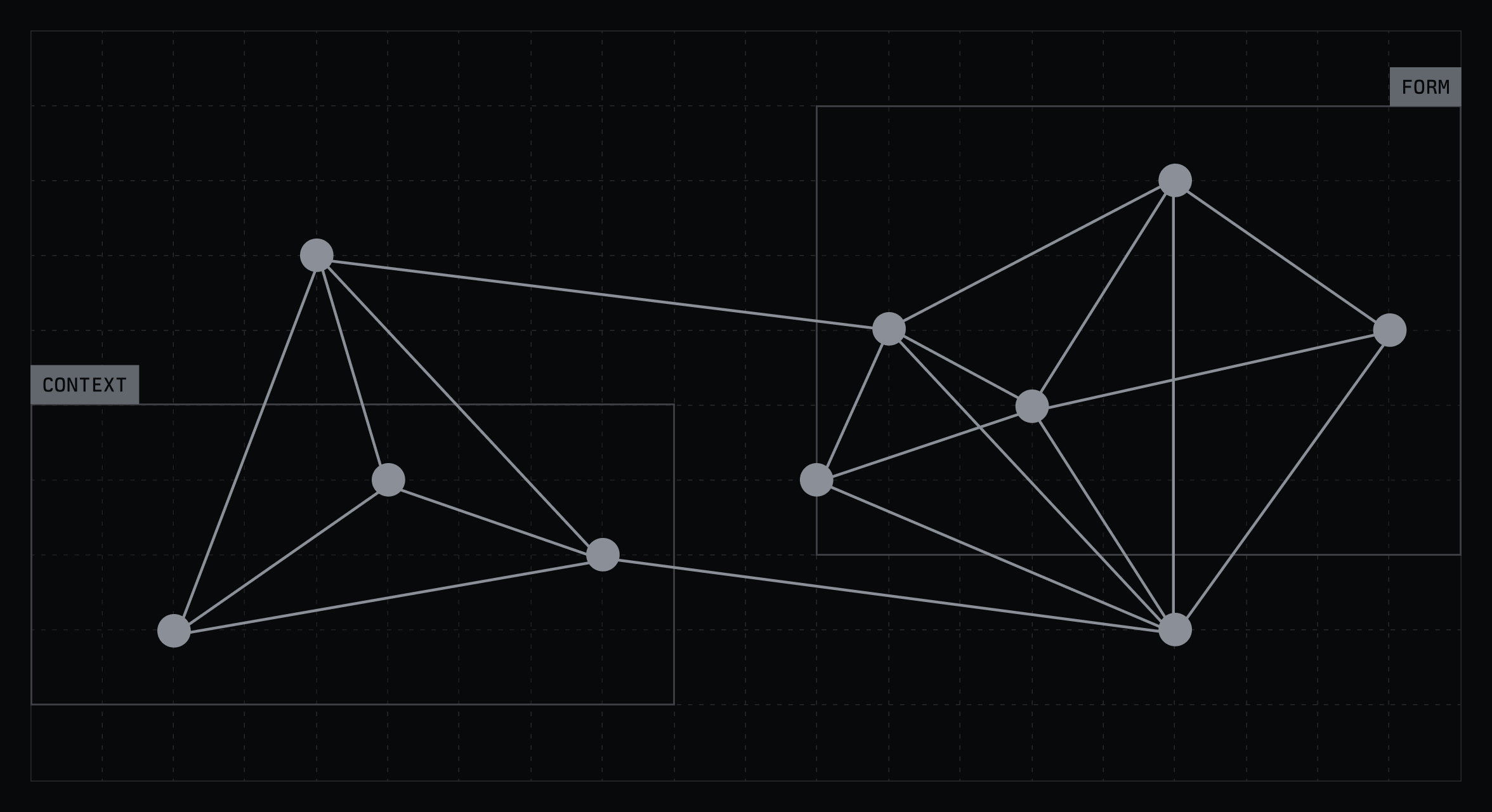
That is the misunderstanding. The hard part of design is rarely generating the form. It is understanding the problem well enough to know what and how something should exist at all. There is use and place for these tools, but tools are not the design process. Christopher Alexander came closer than anyone to naming this clearly. In Notes on the Synthesis of Form, he describes design as the search for a good fit between a form and its context. Context, in his sense, is not a background condition. It is the full set of forces that make a problem what it is: human needs, technical constraints, conflicting requirements, habits, edge cases, and relationships that are easy to miss until you spend time with them. Bad design appears where those forces remain unresolved. Good design appears where those misfits have been worked through carefully.
That distinction matters even more now because of how AI encourages you to work. They generate plausible outputs quickly, but they do not necessarily help you understand the underlying problem. In practice, they often do the opposite. They generate outputs, instead first trying to shape the problem or the form to the real conditions of the problem.
You can already see the result in products that look polished, ambitious, and impressive at first glance, but begin to unravel the moment you actually use them. They feel brittle, poorly integrated, and full of decisions that were never fully worked through. The form is there. The fit is not.
That is also why I still prefer designing visually over prompting. Working visually keeps me close to the problem and is slow enough gives me time to think while I work. Moving things around, testing relationships, and refining structure is not separate from the thinking. It is part of how clarity emerges.
There is something cathartic about that process, in the same way writing can be. Writing helps clarify thought because the act itself forces you to organize it. Asking AI to write for you can produce text, but it usually does not rearrange your thinking. Design works the same way for me. The value is not only in the output. It is in the gradual understanding that comes through doing the work.
AI can still be useful. It can help prototype, explore, and surprise you. But that is different from design. Design still requires judgment, conversation, tension, and time.
The risk is mistaking generated form for solved problems.
The core design is still about understanding, not output.