Filters
Filters allow you to refine existing views and create custom views to show only the relevant issues.
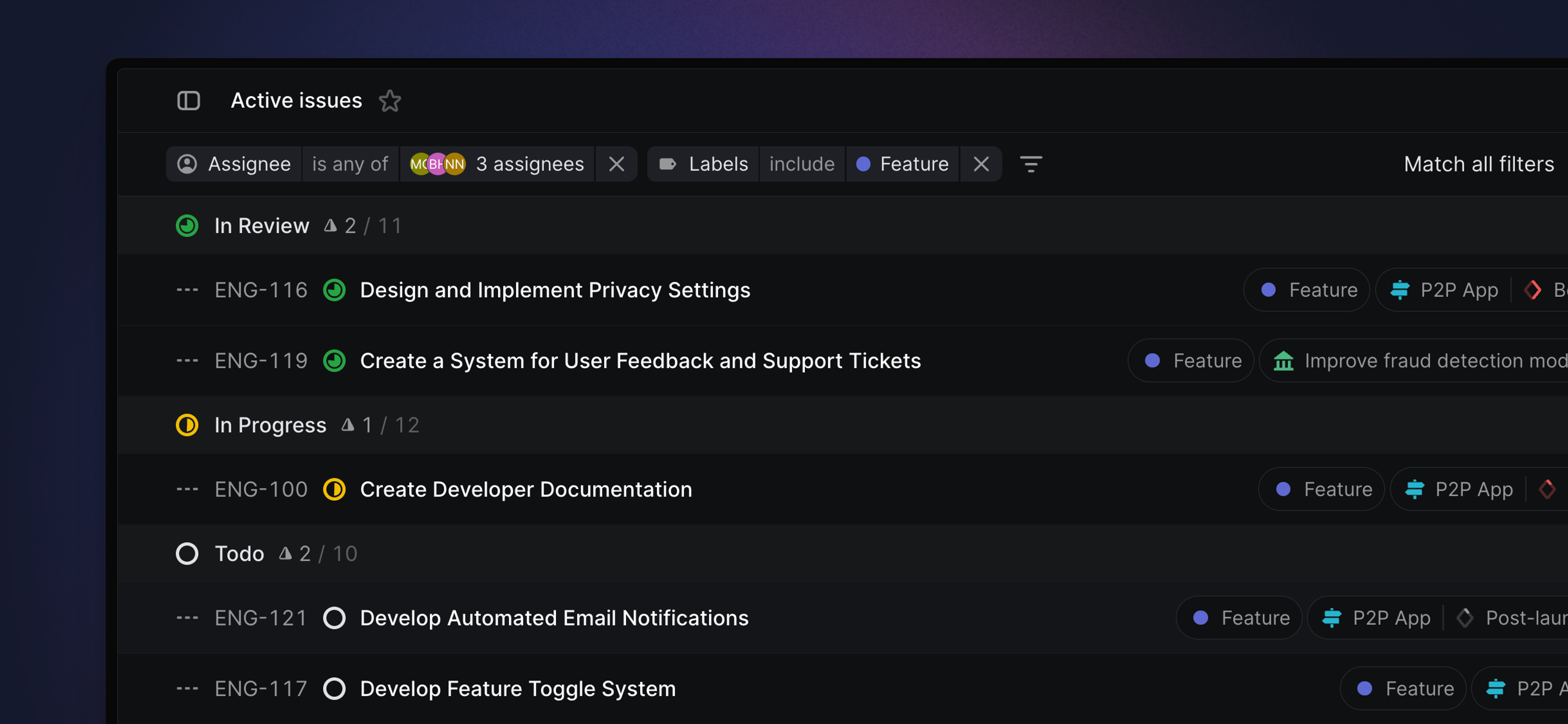
Filters help narrow a view to the issues most relevant to the work at hand. They can be used across issue lists to focus on specific assignees, statuses, labels, projects, cycles, and more.
Use filters when reviewing active work, checking ownership, triaging requests, or sharing a focused view with someone else.
Apply filters
Open the filter menu or type F shortcut to choose the criteria you want to apply. A view can have one or more filters at the same time, so it’s possible to narrow results in very specific ways.
As filters are applied, the issue list updates to show only matching results.
The applied filters are also reflected in the browser URL. You can copy the browser address to share the filtered view; opening the link applies the same filters. Only the main filters are included in the URL. View options, quick filters, and Insights filters aren’t included.
Advanced Filters
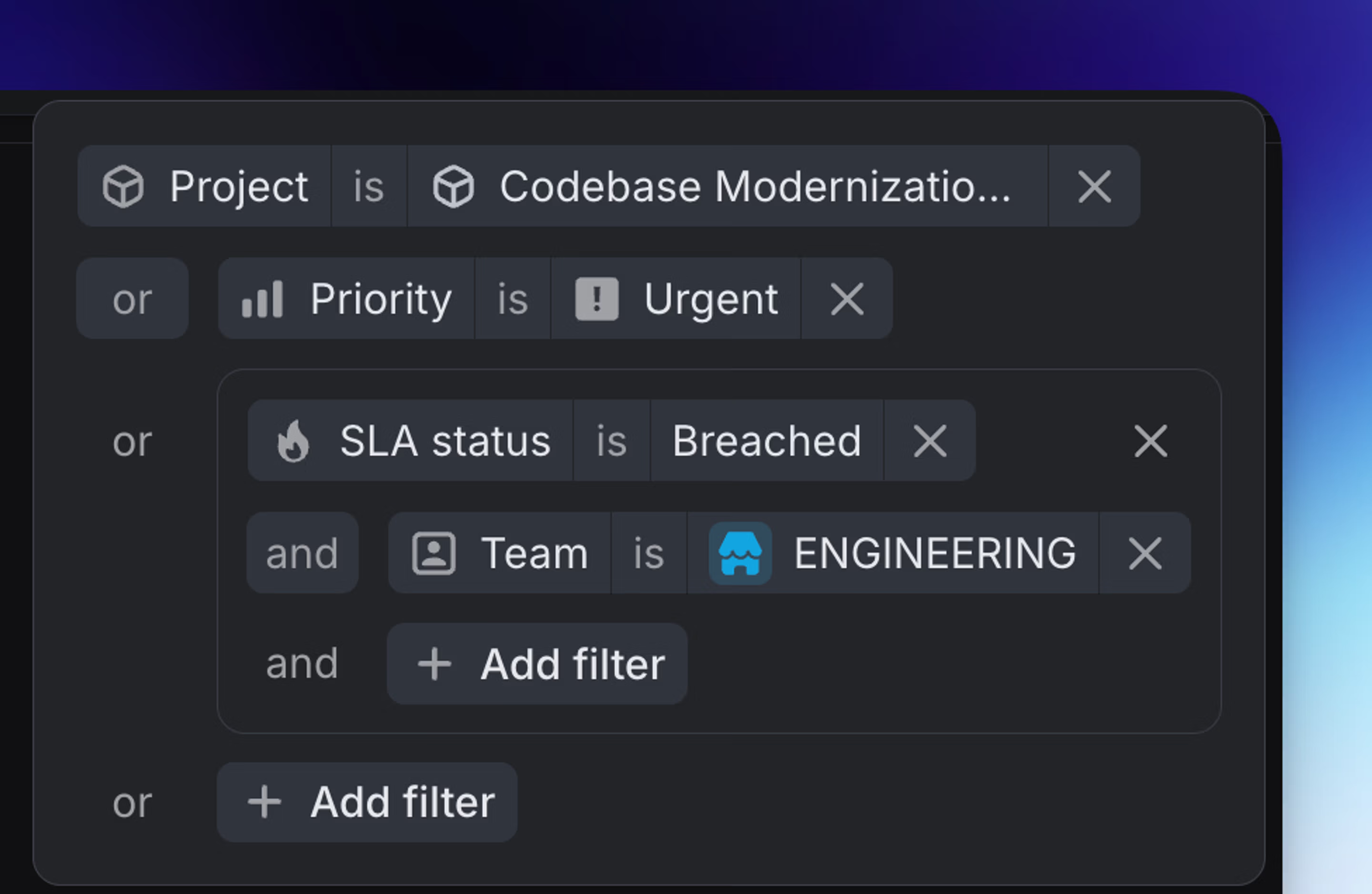
Advanced filters let you build more precise views by grouping conditions and combining them with AND/OR logic (including nested filter groups). From the filter menu, choose Advanced filter to open the builder, add conditions, and adjust the logic between them.
Filter with AI
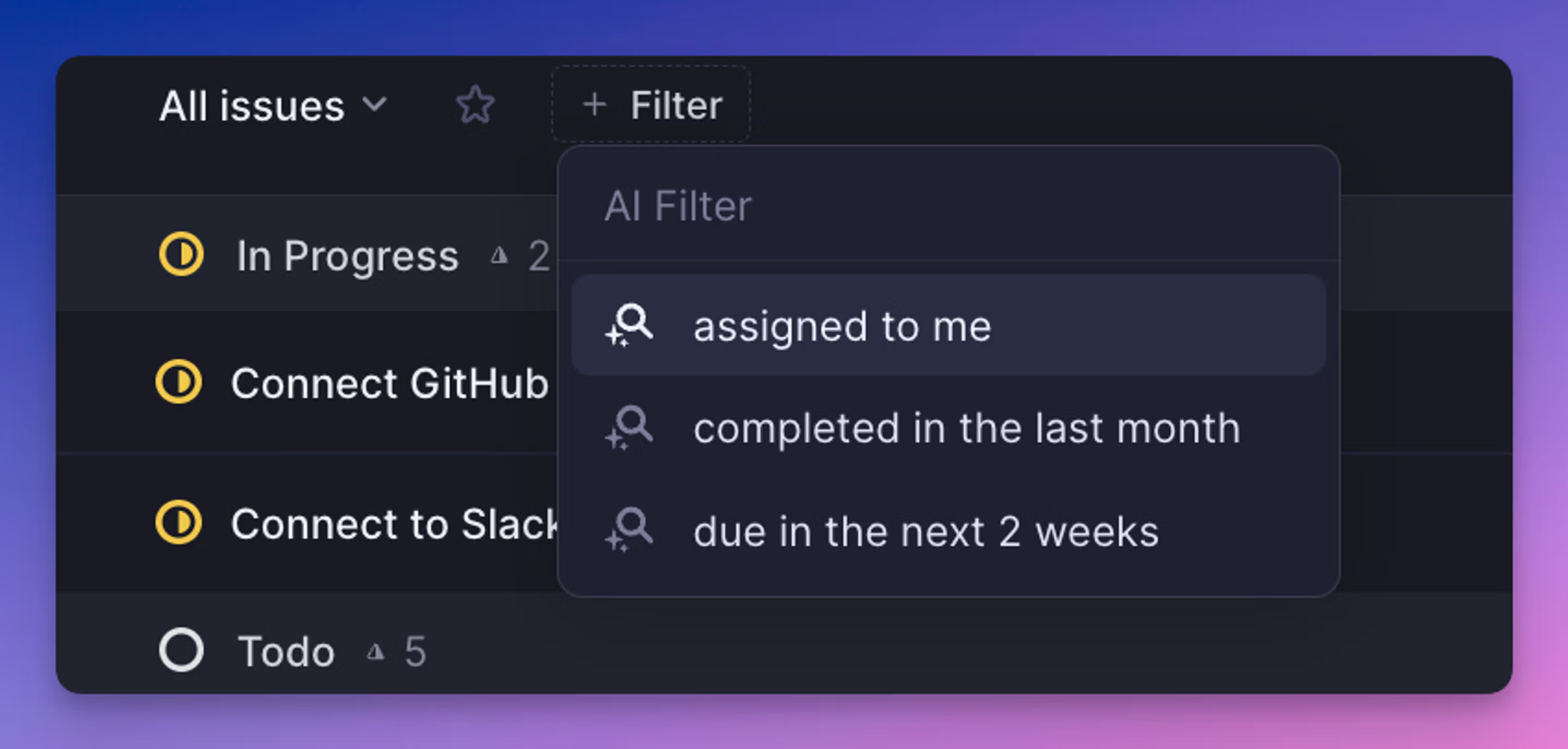
Use natural language combined with artificial intelligence to filter your views. For example filter by phrases like “Show me issues assigned to me”, “What issues are important?”, “ what issues are due next week” and so on, to have your views automatically filtered with the most suited parameters.
Working with filters
The exact set of available can vary by workspace features and by the view you’re in.
There are a few nuances to know:
- To filter for no labels, you’ll have to select all labels and then switch the operator to does not include.
- To filter by milestones, you must filter by project first.
- You cannot filter for suspended users. To find issues assigned to or created by suspended users, navigate to their profile page (
linear.app/workspace-name/profiles/username). If you do not know the username, an admin can find the link by clicking on member in the Members page.
Quick search filters
If you know the specific name of the property you want to filter, you can type that directly and the filter will show up as a choice, saving you from having to click through the category to select it.
| Property type | Quick filters |
|---|---|
| Team | Team name |
| Status | Status name |
| Assignee | Username |
| Created by | Username |
| Priority | "High", "Low", etc. |
| Labels | Label or label group name |
| Content | No quick filters available |
| Cycle | Active, Upcoming |
| Project | Project name |
| Subscriber | Username |
| Relations | These are top level filters |
| Date filters | "N days", Month, Quarter, Half-year, Year |
| Links | Front, Zendesk, Intercom, custom link source |
| Milestone | Milestone name |
Added to cycle
The Added to cycle filter is different from Cycle.
It answers when the issue was added relative to the cycle, not which cycle it belongs to. The values are:
Added to cycledescribes when an issue was added to a cycle relative to that cycle’s start date.Plannedmeans the issue was added before the cycle started or within the first 24 hours after it began.After cyclemeans the issue was added more than 24 hours after the cycle started, including after the cycle ended.
Build with operators
Once you add a filter, refine it with operators. The filter type cannot be changed but clicking on any other part of the filter formula will give you options to change it and modify the query.
For instance, for a filter that says Assignee is Andreas, clicking on Assignee will do nothing, clicking on is will give you the option to change the operator to is not, and clicking on Andreas will show a selectable list to modify the assignee. If you add another assignee, Adrien, then you’ll see the is operator change to is either of or is not.
We support the following operators in Linear, which will show up depending on the type of filter and selections:
- is or is not when one option is included in the filter
- is either of or is not when multiple options are included in the filter
- includes any, all, neither, either, or none for labels and links
- before or after for date-related filters
Filter with API
For more complex filters or to build queries on the API, see our developer documentation.